
Soft washing vs. pressure washing: how to choose for your home
By Aisha Vogel · Updated 2026-06-22
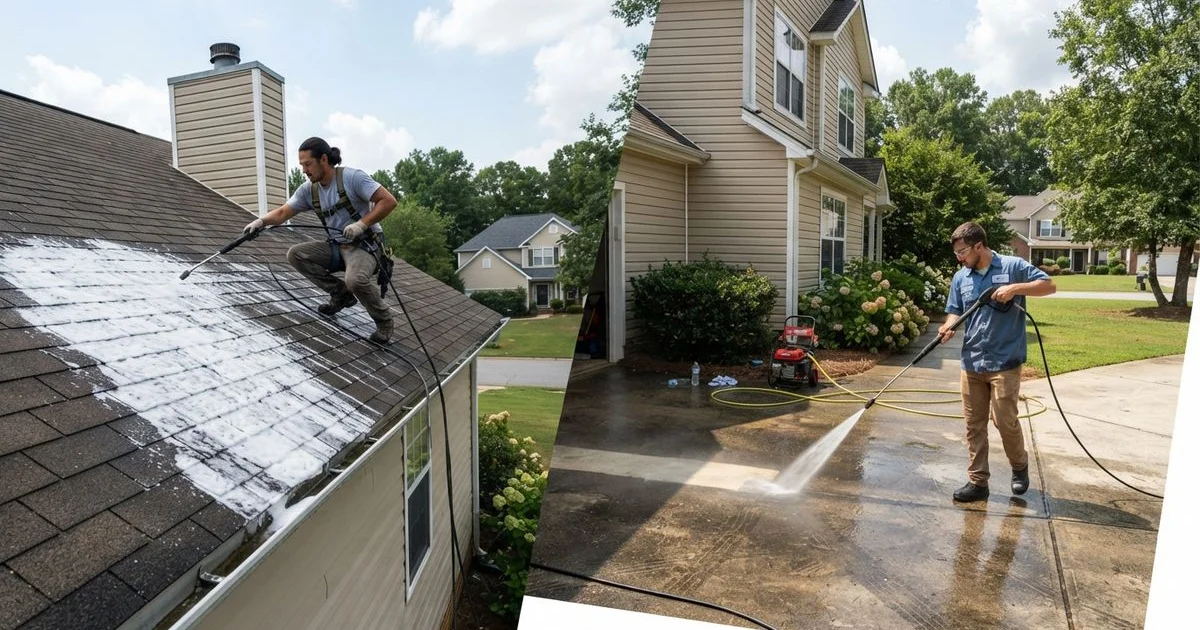
“Pressure washing” gets used as a catch-all term, but soft washing and pressure washing are genuinely different techniques, and using the wrong one on the wrong surface is one of the most common ways a cleaning job goes badly. Here’s how to tell them apart and know which one your job actually needs.
The core difference
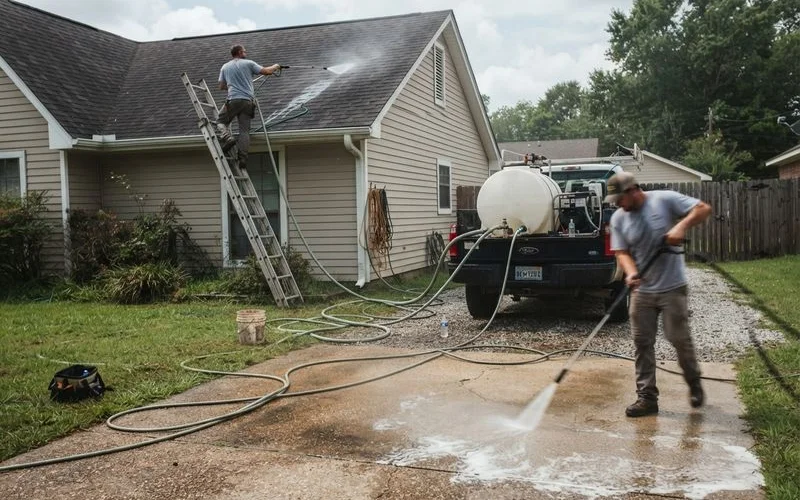
Pressure washing uses high water pressure, often 3,000 to 4,000 PSI, to physically blast dirt, algae, and stains off a surface. It works fast and is well suited to hard, durable materials like plain concrete and some brick.
Soft washing uses much lower pressure, closer to what you’d get from a garden hose, combined with a cleaning solution that kills algae, mold, and mildew at the root. The chemical does most of the work; the rinse just carries it away. It takes a little longer to show full results since the solution needs dwell time, but it’s gentler on delicate surfaces and often more effective against organic growth than pressure alone.
Which method fits which surface
| Surface | Typical method | Why |
|---|---|---|
| Plain concrete driveway | Pressure washing | Durable, hard surface handles force well |
| Asphalt shingle roof | Soft washing | High pressure strips protective granules |
| Vinyl or painted siding | Soft washing | Pressure can force water behind panels or strip paint |
| Wood deck or fence | Soft washing, adjusted pressure | Fibers can splinter or “fuzz” under too much force |
| Brick | Either, depending on age and mortar condition | Older or crumbling mortar needs lower pressure |
What goes wrong when the method is mismatched
Using high pressure where a soft wash belongs is the more common mistake, and it’s usually invisible until later. On a roof, it can strip granules and shorten shingle life by years, not just make it look temporarily better. On siding, forcing water at high pressure can push moisture behind panels, leading to mold growth you won’t see until it’s already established. On wood, too much pressure raises the grain and leaves a fuzzy, splintered texture that never fully smooths back down.
The reverse mistake, using a soft wash where pressure would work faster, isn’t damaging, it’s just slower and sometimes leaves more stubborn stains behind on surfaces that could have tolerated more force.
How to ask the right question when hiring
Rather than asking “do you pressure wash,” ask what method they plan to use on each specific surface. A contractor who explains that your roof gets a soft wash while your driveway gets pressure washed with a surface cleaner attachment is speaking the language of someone who adjusts technique to the material. A contractor who says everything gets the same treatment is worth a second question before you book.
It’s also fair to ask what chemical solution they use for soft washing and whether it’s rinsed thoroughly afterward, since leftover residue can affect grass and plants nearby.
Why some companies default to pressure only
Pressure washing equipment is generally simpler and cheaper to run than a full soft wash setup, which includes chemical tanks, downstream injectors, and the right detergent for each surface. A company that only offers pressure washing isn’t necessarily dishonest, but it does mean they may not be equipped to properly clean a roof or delicate siding, and might either turn that work down or use pressure where it doesn’t belong. Asking directly whether a company offers both methods is a quick way to gauge how equipped they are for a full range of exterior surfaces.
Getting both jobs done in one visit
Many homes need both methods in the same appointment: a pressure-washed driveway alongside a soft-washed roof or siding, for example. A crew equipped for both saves you from coordinating two separate companies and two separate visits. When comparing quotes for a multi-surface job, it’s worth confirming that the price and timeline account for both techniques rather than assuming one flat rate covers whatever approach they end up using on each surface. If your driveway is the main culprit, the DIY vs. pro driveway cleaning guide walks through when a rental unit is enough and when it’s worth calling a pro.
Once you know which method your job needs, you can browse local providers by category. Start from the homepage to find the right service category for your project, and see our methodology page for how we evaluate the companies listed here.
Questions people ask
- Is soft washing weaker than pressure washing?
- It's lower pressure, not weaker cleaning. Soft washing relies on cleaning solution to break down algae, mold, and mildew, then a low-pressure rinse. It's the more thorough option for organic growth, not a compromise.
- Can pressure washing damage my roof?
- Yes. Asphalt shingles have a granule coating that high-pressure water can strip away, shortening the roof's life. That's the main reason roof cleaning is almost always done as a soft wash, not a pressure wash.
- What surfaces are safe for full pressure washing?
- Plain concrete, most brick, and other hard, non-porous surfaces generally tolerate higher pressure well. Painted wood, vinyl siding, asphalt shingles, and stucco are more likely to need a soft wash approach.
- How do I know which method a company plans to use?
- Ask directly before booking. A company that automatically defaults to high pressure on every surface, including roofs and siding, is a red flag. The right answer usually depends on the material, not a one-size-fits-all setting.