
DIY vs. hiring a pro for driveway and concrete cleaning
By Aisha Vogel · Updated 2026-06-26
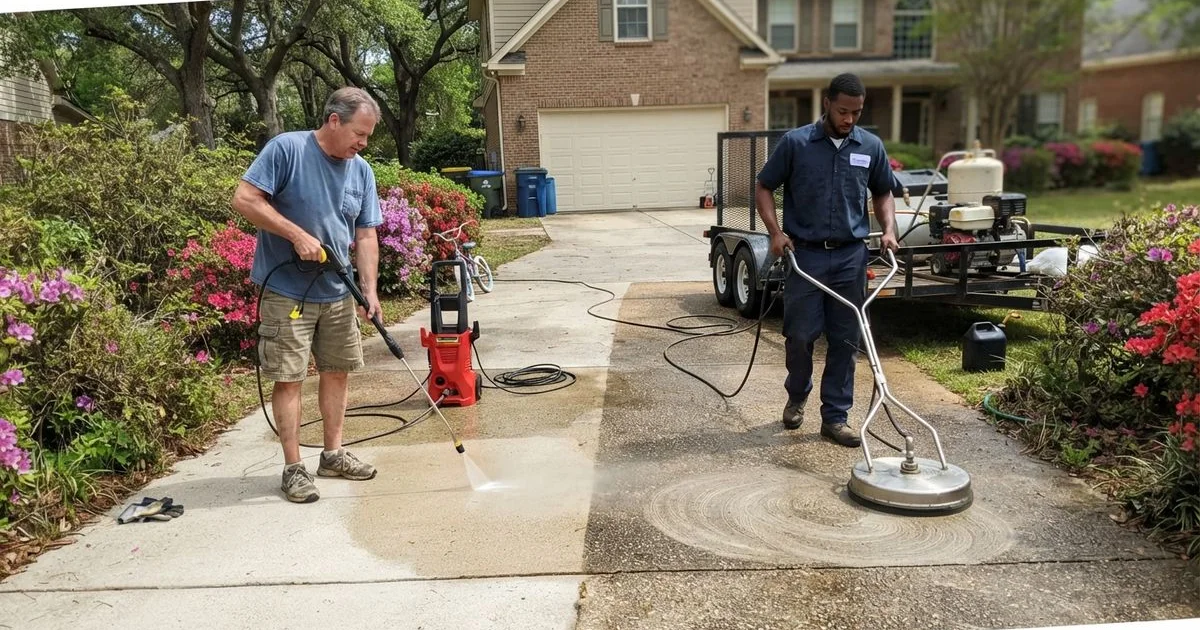
Every spring, a fair number of Columbia homeowners look at a dingy, algae-streaked driveway and ask the same question: rent a pressure washer for a weekend, or just call someone. Both are reasonable answers depending on the job. Here’s how to actually decide.
What DIY really costs
A gas pressure washer rental typically runs for a day or a weekend, plus you’ll often need to buy or rent a surface cleaner attachment and a cleaning chemical separately if the unit doesn’t come with one. Add your own time: a driveway with real staining usually needs a pretreatment step, a dwell time, then the actual wash, which can eat most of a Saturday for a first-timer working out the right technique.
Compare that to a professional visit, where you’re paying for equipment that’s already dialed in, a crew that knows which nozzle and pressure to use on your specific concrete, and a job that’s typically done in an hour or two. For a small, lightly dirty driveway, DIY can still come out ahead on pure cost. For anything bigger or more stained, the math shifts fast once you count your own time and the risk of a mistake.
The real risk: damaging the concrete
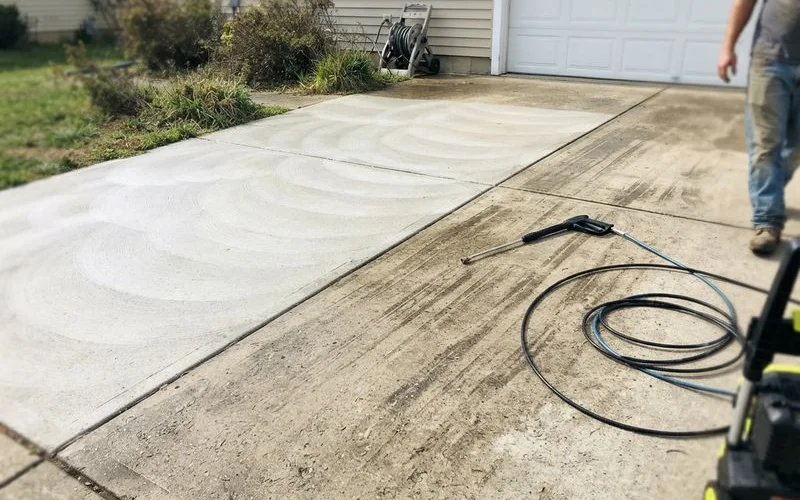
This is where DIY jobs go wrong most often. A surface cleaner attachment spreads pressure evenly across concrete, which is why professionals use one instead of a bare wand for large flat areas. Without it, holding a narrow-degree nozzle too close or moving too slowly can etch visible stripes or “zebra” patterns into the surface that don’t buff out. Stamped or stained concrete is even less forgiving: too much pressure can strip color or sealant right off.
| Job type | Reasonable for DIY | Better left to a pro |
|---|---|---|
| Light dust, pollen film, small area | Yes | Not usually needed |
| Moderate algae or mildew staining | Sometimes, with a surface cleaner | Recommended if unsure |
| Heavy oil or rust stains | Not recommended | Yes, needs degreaser and technique |
| Stamped, stained, or sealed concrete | Not recommended | Yes, high damage risk |
| Large driveway (over 800 sq ft) | Marginal on time | Recommended |
What a pro actually does differently
Beyond equipment, the biggest difference is diagnosis. A professional crew looks at whether staining is algae, rust, oil, or efflorescence (the white, chalky mineral deposit that shows up on older concrete) before picking a chemical and pressure setting, since each one needs a different approach. Oil and rust usually need a degreasing pretreatment; algae and mildew respond to a bleach-based or sodium hypochlorite mix; efflorescence often needs a different acid-based treatment entirely and won’t budge with pressure alone.
Pros also tend to protect the surroundings as part of the job: rinsing nearby grass and flower beds, keeping runoff away from storm drains, and checking that chemical dwell time doesn’t sit too long on the concrete before rinsing. Concrete almost always calls for standard pressure washing rather than the low-pressure approach used on roofs and siding; the soft washing vs. pressure washing guide breaks down when each method applies.
Questions to ask before you decide
If you’re leaning toward hiring out, a few questions separate a solid quote from a risky one:
- Do you use a surface cleaner attachment for flat concrete, or just a wand?
- How do you identify staining type before choosing a chemical?
- What’s your plan for protecting grass and landscaping near the driveway?
- Are you insured in case something goes wrong?
If you’re leaning DIY, start with the lowest-pressure setting that gets the job done and test an inconspicuous corner first, especially on decorative or older concrete.
Renting equipment: what to actually get
If you decide to go the DIY route, a gas unit in the 3,000 to 4,000 PSI range with a surface cleaner attachment covers most standard driveways well. Electric units under 2,000 PSI can still work, but expect to make more passes and spend more time on stubborn spots. Ask the rental counter which nozzle degree is included and whether a pretreatment chemical is sold separately, since showing up without the right combination is a common reason a DIY weekend takes longer than planned.
Sealing after cleaning
If you’re planning to seal the driveway after washing, the surface needs to be fully dry first, typically at least a day depending on humidity and sun exposure. Sealing over a damp or improperly cleaned surface can trap moisture and lead to a cloudy or uneven finish. This is another point where a professional job has an edge, since a crew doing both steps in sequence already knows how long to wait between them for your specific weather conditions.
Ready to compare quotes instead of guessing? Browse local providers in the driveway and concrete cleaning category, or head back to the homepage to explore other exterior cleaning categories. Our methodology page explains how we score and rank the companies listed here.
Questions people ask
- Is it cheaper to rent a pressure washer than hire a pro?
- Rental costs less upfront for a single job, but factor in your time, the learning curve, and the risk of etching or streaking concrete if you use the wrong nozzle or pressure. For a first-time job or a driveway with stubborn stains, a pro often ends up the better value.
- Can a rental pressure washer damage my driveway?
- Yes. Holding a 0-degree nozzle too close or too long can etch stripes into the concrete surface that don't come out. This is one of the most common DIY mistakes and a big reason pros use surface cleaner attachments instead of a bare wand.
- What PSI do I need for a driveway?
- Most residential driveways clean well in the 3,000-4,000 PSI range with the right nozzle and a pretreatment chemical. Consumer-grade electric washers under 2,000 PSI can still work, they just take longer and need more passes.
- When does DIY make the most sense?
- Light dirt or dust with no real staining, a small area, and no delicate stamped or stained concrete are the conditions where a rental unit is a reasonable choice. Heavy oil stains, large driveways, or decorative concrete lean toward hiring a pro.