
Who's liable when pressure washing damages your property?
By Aisha Vogel · Updated 2026-07-01
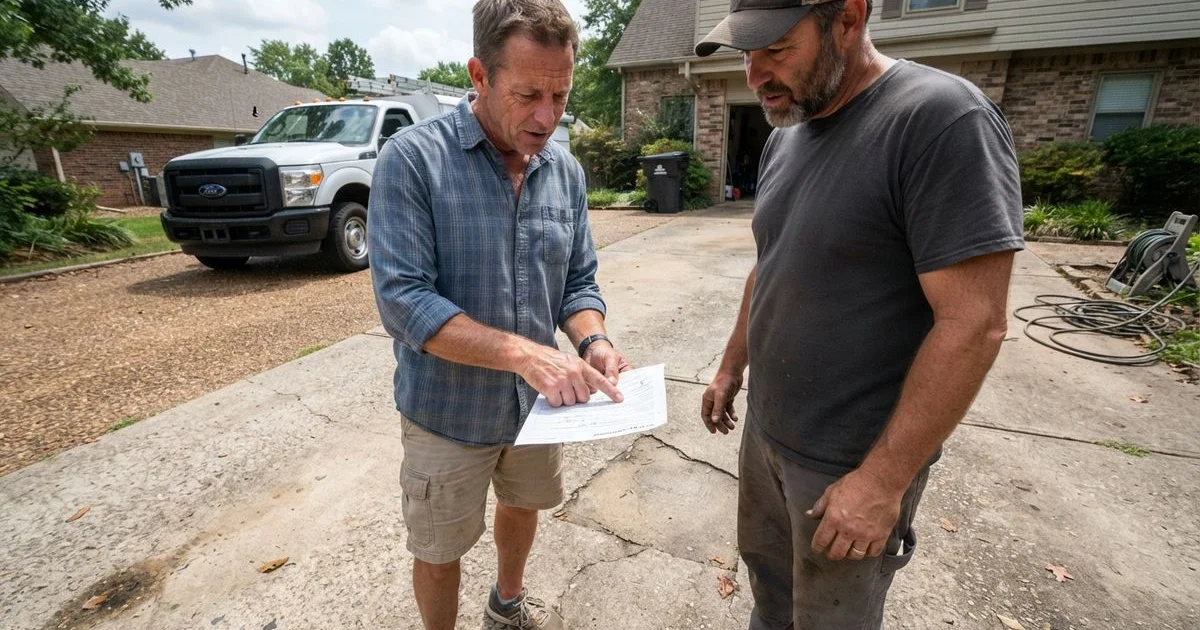
Property damage during a pressure washing job isn’t common, but it’s real and it’s one of the more consistent complaint patterns we see across local review data: chemical damage to landscaping, streaked or etched concrete, and the occasional overspray onto a parked car. Knowing who’s actually responsible, and how to protect yourself upfront, matters more than it might seem before you book.
This is general information, not legal advice. For a specific dispute, consider consulting a local attorney or your state’s consumer protection office.
What actually goes wrong
A few types of damage come up more than others in the complaint patterns across local providers:
- Plant and landscaping damage. Cleaning chemicals, especially bleach-based solutions, can burn or kill grass, shrubs, and flower beds if not rinsed or diverted properly.
- Etched or streaked concrete. Holding a narrow-degree nozzle too close or too long can leave permanent marks that don’t buff out.
- Water intrusion. High-pressure water can force moisture behind siding or window trim, sometimes leading to problems that surface weeks later.
- Overspray. Cleaning solution drifting onto a parked car, an air conditioning unit, or a neighboring property.
Whose responsibility is it
| Who caused it | Who’s typically liable |
|---|---|
| Contractor’s technique or equipment error | The contractor, through their general liability insurance |
| Pre-existing wear the wash exposed (not caused) | Usually neither party, it was already there |
| Homeowner’s own DIY attempt | The homeowner |
| A genuine accident unrelated to the service | Depends on the specifics, may involve your own insurance |
A contractor’s own liability insurance is the mechanism that’s supposed to cover damage they cause, which is a big part of why confirming a company is insured, and asking to see proof, is worth doing before you hire rather than after something happens.
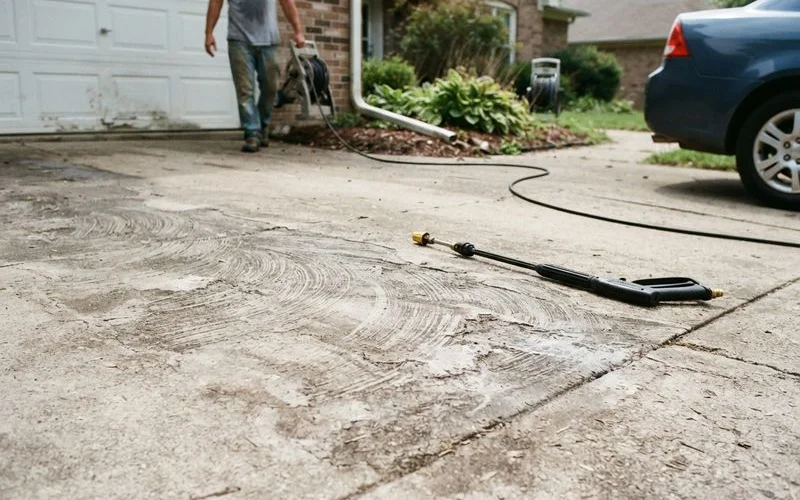
Protecting yourself before you book
- Ask for proof of general liability insurance, not just a verbal assurance.
- Get a written scope of what’s being cleaned and how, especially for delicate surfaces like decorative concrete or mature landscaping.
- Photograph the property beforehand, particularly anything already worn, cracked, or discolored, so there’s no ambiguity later about what existed before the job.
- Check recent reviews for damage-related complaints and, just as important, how the company responded when something went wrong.
Contractors also carry separate compliance duties around runoff and licensing; the pressure washing laws and runoff rules guide covers what South Carolina expects.
What to do if damage happens
Document it immediately with photos and a written note of the date and what you observed. Contact the company directly and give them a chance to respond before escalating; most established businesses would rather fix a mistake than lose a customer over it. If they’re unresponsive or deny an obvious issue, that’s when a formal insurance claim or a complaint through your state’s consumer protection channels becomes the next step.
When overspray affects a neighbor
Chemical drift or overspray onto a neighboring yard, fence, or vehicle creates a slightly different situation, since the neighbor isn’t your customer and won’t necessarily know who to contact. If you notice this happening during your own appointment, flagging it to the crew in the moment is the fastest way to prevent it. If a neighbor comes to you afterward about damage, connecting them directly with the contractor you hired, along with the date and details, is usually the quickest path to resolution, since the contractor’s liability insurance is the same mechanism that applies regardless of whose property was affected.
If it becomes a formal dispute
For damage a company won’t acknowledge or resolve, small claims court is an option many homeowners overlook, since it’s designed for exactly this kind of dollar-amount dispute without requiring a lawyer. Keep your documentation organized: photos, the written scope or quote, any communication with the company, and receipts for repair estimates if you got one. A clear paper trail matters more than how the conversation went, since it’s what actually supports a claim if it goes that far.
Reviewing a company’s track record before you hire is the best defense here. Browse local providers and their review history from the homepage, or see our methodology page for how we weigh responsiveness and complaint patterns in our scoring.
Questions people ask
- What kind of damage actually happens during pressure washing jobs?
- The most commonly reported issues are plant or landscaping damage from cleaning chemicals, etched or streaked concrete from incorrect pressure, water forced behind siding, and occasional overspray onto vehicles or outdoor structures.
- Who pays if a company damages my property?
- In most cases, the contractor's general liability insurance covers it, not your homeowners policy. That's why confirming insurance before hiring matters more than it might seem.
- What should I do the moment I notice damage?
- Photograph it immediately, note the date and details, and contact the company directly before doing anything else. Most legitimate businesses want to resolve it quickly rather than let it become a bigger dispute.
- What if the company won't take responsibility?
- Escalate to a formal claim against their liability insurance if they have one, and document everything in writing. This is also a case where checking review history before you hire helps, since a track record of unresolved complaints is a visible warning sign.