
Black streaks and roof algae: is it a health risk, and does it hurt your roof?
By Aisha Vogel · Updated 2026-07-03
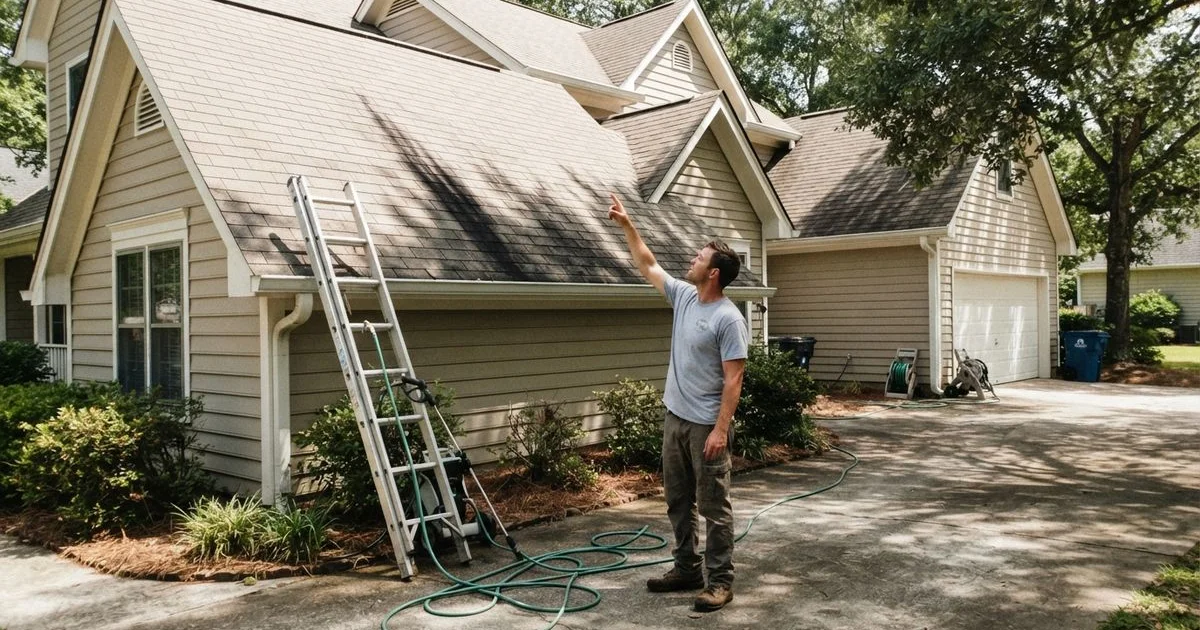
If your roof has developed dark streaks that look like dirt but won’t rinse off in the rain, you’re probably looking at algae, not dirt or mold. It’s extremely common on Columbia rooftops, and understanding what it actually is changes both how worried you should be and how it should be cleaned.
This is general information, not medical or structural advice. For concerns about your specific roof’s condition, consult a roofing professional.
What’s actually growing on your roof
The dark streaking is typically a type of blue-green algae that feeds on the limestone filler in asphalt shingle granules. It thrives in shade and moisture, which is why it shows up most on north-facing roof slopes or sections shaded by trees, both common conditions across Columbia neighborhoods with mature tree cover. Unlike moss, this algae doesn’t have roots, but it does have a protective coating that makes it stubborn to remove with plain water.
Is it actually a health risk
For people living in the house, roof algae isn’t generally treated as a direct health hazard. It’s not the same category of concern as indoor mold growth, which affects air quality inside living spaces. The bigger issues with roof algae are more practical: it looks bad from the street, and left untreated for years, the algae and trapped moisture can gradually shorten the life of your shingles by degrading the surface underneath.
That said, if you’re also noticing mold or mildew inside the home, especially near the attic or roofline, that’s a separate and more direct concern worth having assessed, since it can point to a ventilation or moisture problem rather than just surface algae.
| Concern | Roof algae (black streaks) | Interior mold near roofline |
|---|---|---|
| Typical health relevance | Low, mostly cosmetic and structural over time | Higher, can affect indoor air quality |
| Fix | Soft wash cleaning | Address moisture source, may need professional assessment |
| Urgency | Manageable on a normal cleaning schedule | Worth investigating sooner |
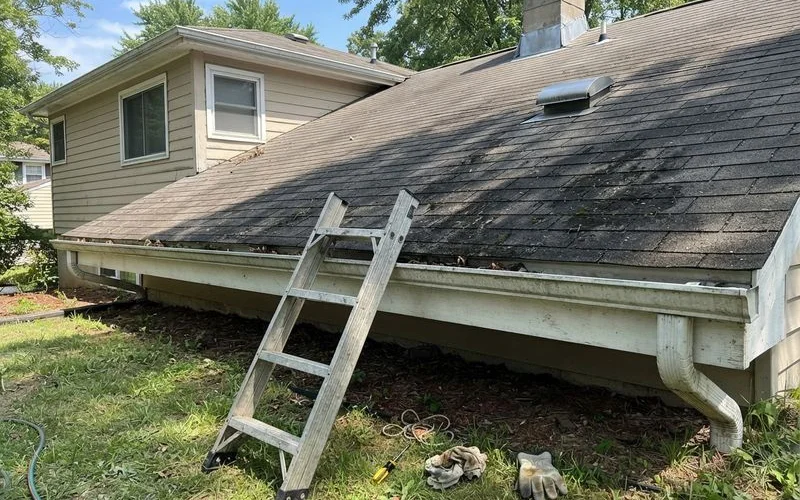
Why removal method matters more than urgency
There’s no emergency timeline for cleaning roof algae, but there is a wrong way to do it. High-pressure water strips the protective granules off asphalt shingles, and once that coating is gone, it doesn’t come back, which shortens the roof’s usable life. This is the main reason roof cleaning is almost always done as a soft wash: low pressure combined with an algaecide solution that kills the algae and lets it rinse away without mechanical force stripping the shingle surface.
If a company offers to pressure wash your roof at full force, that’s worth questioning before you agree to it.
Why it spreads between houses
Algae spores travel by wind and by birds landing on infected roofs before moving to the next one, which is part of why it’s common to see one whole street or subdivision develop streaking around the same time, especially in older neighborhoods with a lot of mature tree cover. If a neighbor’s roof already shows heavy streaking, it’s a reasonable early sign to check your own roof more closely, even if yours still looks clean.
What to watch for
Streaking that’s limited to shaded areas and hasn’t spread significantly is usually fine to address on a normal maintenance schedule. Widespread streaking across most of the roof, or streaking paired with visibly curling or lifting shingles, is worth a closer look from a roofing professional before or alongside a cleaning, since that combination can point to a roof nearing the end of its usable life rather than a simple cleaning fix.
After the wash
A soft wash typically kills the visible algae right away, though some residual discoloration can take a few days to fully rinse and fade as the treated areas dry out completely. Many providers also apply a preventive treatment afterward that slows regrowth, which is worth asking about if your roof sits under heavy shade and streaking tends to return quickly.
Compare local providers who specialize in this in our roof soft washing category, or start from the homepage to browse other exterior cleaning services. Our methodology page explains how we evaluate and rank the companies listed.
Questions people ask
- What causes the black streaks on my roof?
- A type of blue-green algae that feeds on limestone filler in asphalt shingle granules. It thrives in shaded, damp conditions, which is common on north-facing or tree-covered roofs in Columbia's humid climate.
- Is roof algae a health hazard to people inside the house?
- It's not generally considered a direct health hazard to occupants. The bigger concerns are cosmetic appearance and gradual damage to the shingles themselves if left untreated for years.
- Will roof algae go away on its own?
- No. It spreads over time and gets worse, especially in shaded areas that stay damp. It doesn't self-resolve the way some seasonal staining might.
- Can I pressure wash the streaks off myself?
- This is where the real risk is. High-pressure water can strip the protective granules off shingles, which shortens roof life. Soft washing, using low pressure and an algaecide solution, is the method that avoids that damage.